
Features
May 4, 2026
Next Wave Up and Coming Swimmers Series
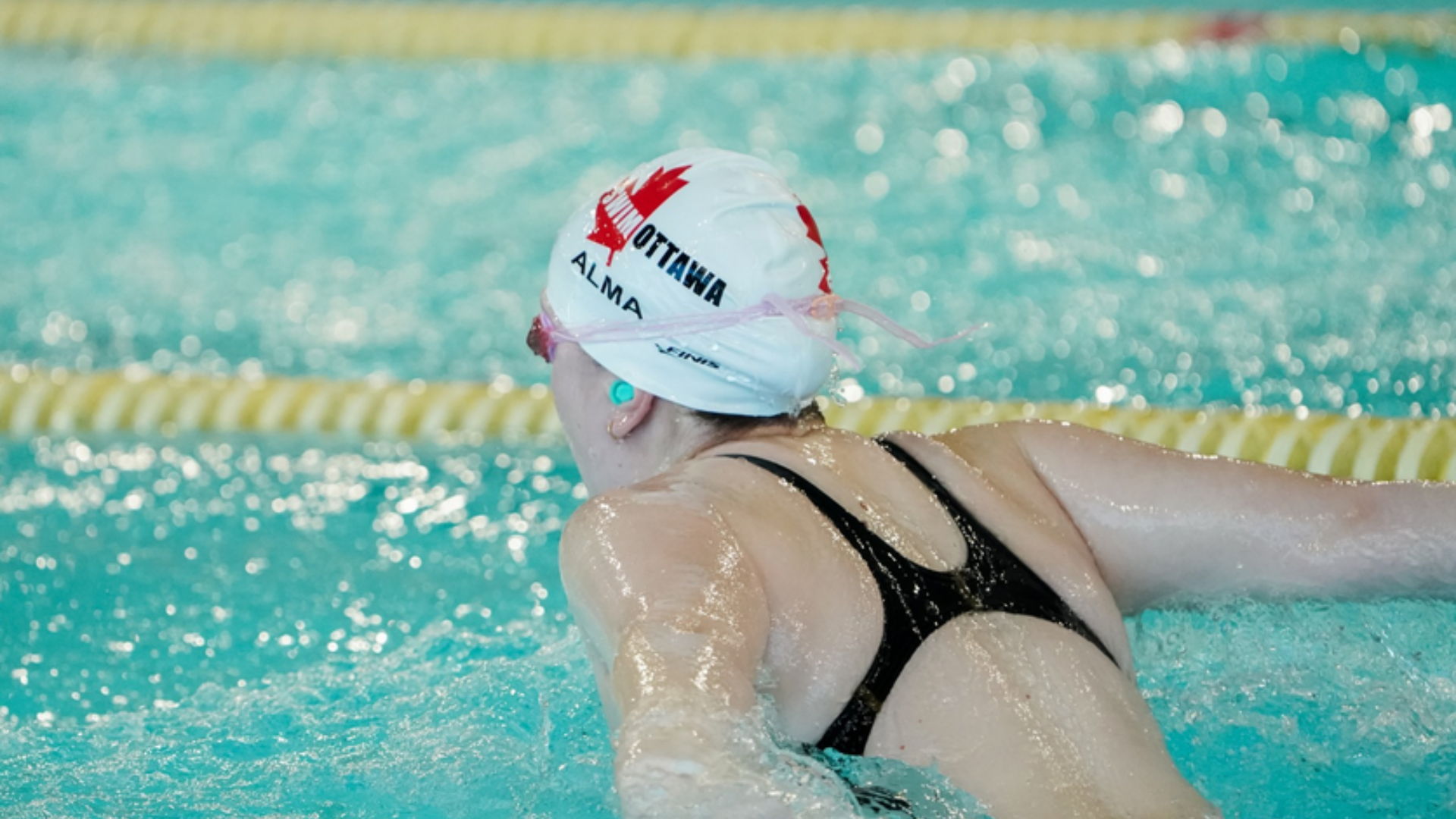
Bella Alma
We are proud to spotlight a group of up and coming para swimmers, and 14 & Under swimmers who are making their mark within the TAG (Top Age Group) Rankings across Canada. Recognized through the leadership and support of the Canadian Swim Coaches Association (CSCA), these athletes represent the next wave of Canadian swimming excellence.
As we launch this series, we celebrate the coaches, clubs, and families who support these swimmers — and we look forward to following their journey as they continue to rise within Canada’s performance pathway.
Every hero, somewhere in life, deals with various forms of agony and distress, misery and anguish as well as the sensation of discomfort.
There is another way of describing it. A four-letter word - pain.
For some, the intense aggravation and grief can come in the form of mental, physical or social feelings while there are also situations that have a combination of these. Human nature is such that people often try not to show stress and hardship. Easier said than done.
Let’s meet Isabella Alma, who prefers to be known by her nickname “Bella”.
She’s midway through a four-year Bachelor’s degree in Global and International Studies at Carleton University in Ottawa. As an academic honors student, with plans to enhance her studies with a Masters, Alma has no interest in a career involving politics or law.
For her, the focus is on employment with a non-government organization and leaning to the fields of human rights and accessibility to health care.
Having been a participant in a variety of sports in her younger years, Alma also is a big fan of swimming. She took lessons as an infant, was the recipient of a special Coaches award while attending St. Mary’s high school in Kitchener and won a gold medal in the 100-metres breaststroke at the recent Ontario University Athletics (OUA) championship in Toronto.
It was at age 16, that Alma was diagnosed with a neurological disorder. Called Hereditary Spastic Paraplegia (HSP), it’s medically defined “as a group of rare, progressive genetic disorders characterized by progressive stiffness (spasticity) and weakness in the leg muscles”.
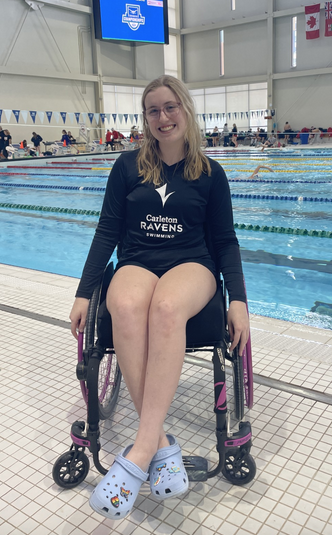
This disability is caused by dozens of different genetic mutations. Over time, it results in significant walking difficulties requiring mobility aids like walkers or wheelchairs. While no cure exists, treatment includes physical therapy and medications to manage symptoms.
Alma knows what it’s like to experience pain. For her, it’s day after day.
“You learn to live with (pain) – life is a mystery on what will hurt next,” she said in a recent telephone conversation when describing her enthusiasm and success in swimming.
“I had the symptoms as a baby. That’s also when doctors said I would grow out of it. Instead, it got worse. I don’t know what it’s like - to live without pain.”
Her lower back, hips and legs stiffen despite taking injections and pain medications. When elaborating on how she finds a way to swim, Alma had a quick reply.
“I like swimming, I want to swim and so I am willing to swim with pain,” said Alma who indicated that her younger sister was diagnosed with the same condition.
“I used to swim laps by myself. When I started at Carleton, I remember my first year being at a student club fair, checking things out and saying I had a disability. I was welcomed and told there was a place for me to swim and I became the only para swimmer on the team.”
Alma also joined Swim Ottawa, a thriving not-for-profit swim club in the nation’s capital that has provided swimming opportunities for the past 20 years. For her, the focus is on development and improving strokes.
“I try to do everything with intention and do my best,” said Alma, who takes public transit in the early hours of the morning to get to the pool. “For me, the goal is straightforward - to work hard and get better.”
Not knowing how to efficiently swim all four different strokes, Alma learned quickly at Carleton and was on the podium for medals presentations after completing the S7/SB6 para 100-metres breaststroke short course in a time of two minutes, 09.69 seconds.
She wasn’t done. Remarkable in the pool, Alma made Ontario university swim history after adding four medals at the year-end (OUA) finale.
While it’s often taken for granted that the elite para swimmers are part of the National program, that’s not always the case. As for Alma, she’s not far behind and already considered to be in category of first-rate, premier and upper-class para swimmers in Ontario.
S7, SB6, SM7 are world para-swimming classifications used for categorizing swimmers based on their level of disability.
“Swimming was supposed to be a form of pain relief for neurological and health reasons,” said Alma. “I tried it – and fell in love with the sport. I really don’t need a medal or ribbon to tell me what I am good at, it’s all about effort and I am grateful to all the people who support me.”
At the Ontario Age Groups meet earlier this year at the Toronto Pan Am Sports Centre (TPASC), Alma clocked her first national time standard in the 100-metres breaststroke in 2:10.68.
“That was a highlight and a big accomplishment,” she added. “I’ve worked hard to promote para as a university sport. For me, it’s always dreaming to achieve what others have done.”
David Grossman is a veteran multi award-winning Journalist and Broadcaster with some of Canada’s major media, including the Toronto Star and SPORTSNET 590 THE FAN, and a Public Relations professional for 50+ years in Canadian sports and Government relations.